
There is a moment in late January when the city goes silent under fresh snow and a single figure cuts across the empty square in a long black coat. No softness in the line. No apology in the colour. Just vertical, just contrast, just presence — the kind of presence that makes you stop walking and watch until she disappears around the corner. That is Dramatic Winter, before we have even named it.
The Blend at a Glance
Dramatic Winter is the meeting of Kibbe’s most yang line family — Dramatic and Soft Dramatic — with the coolest, sharpest end of the colour wheel: Dark Winter, True Winter, and Bright Winter. Long architectural lines meet crystalline contrast. The result is presence as architecture: ice, ink, and edge.
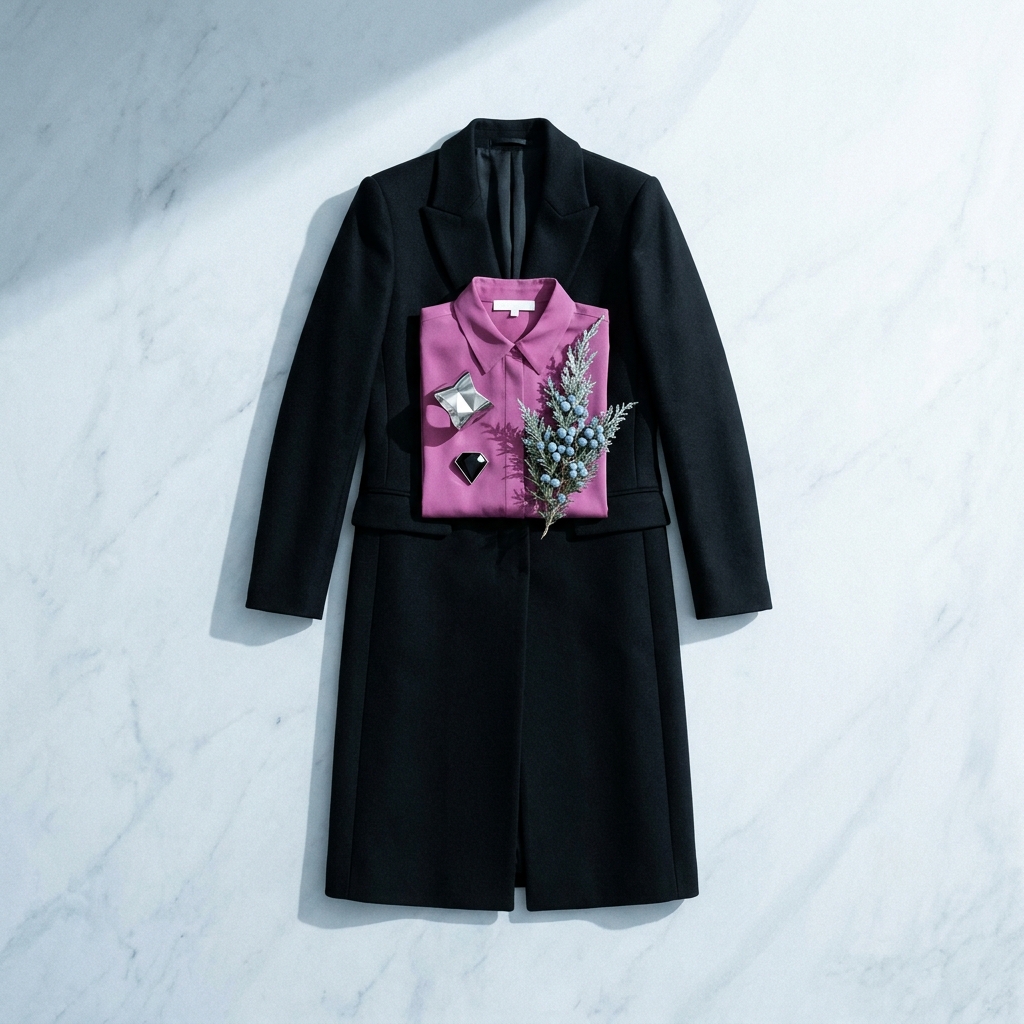

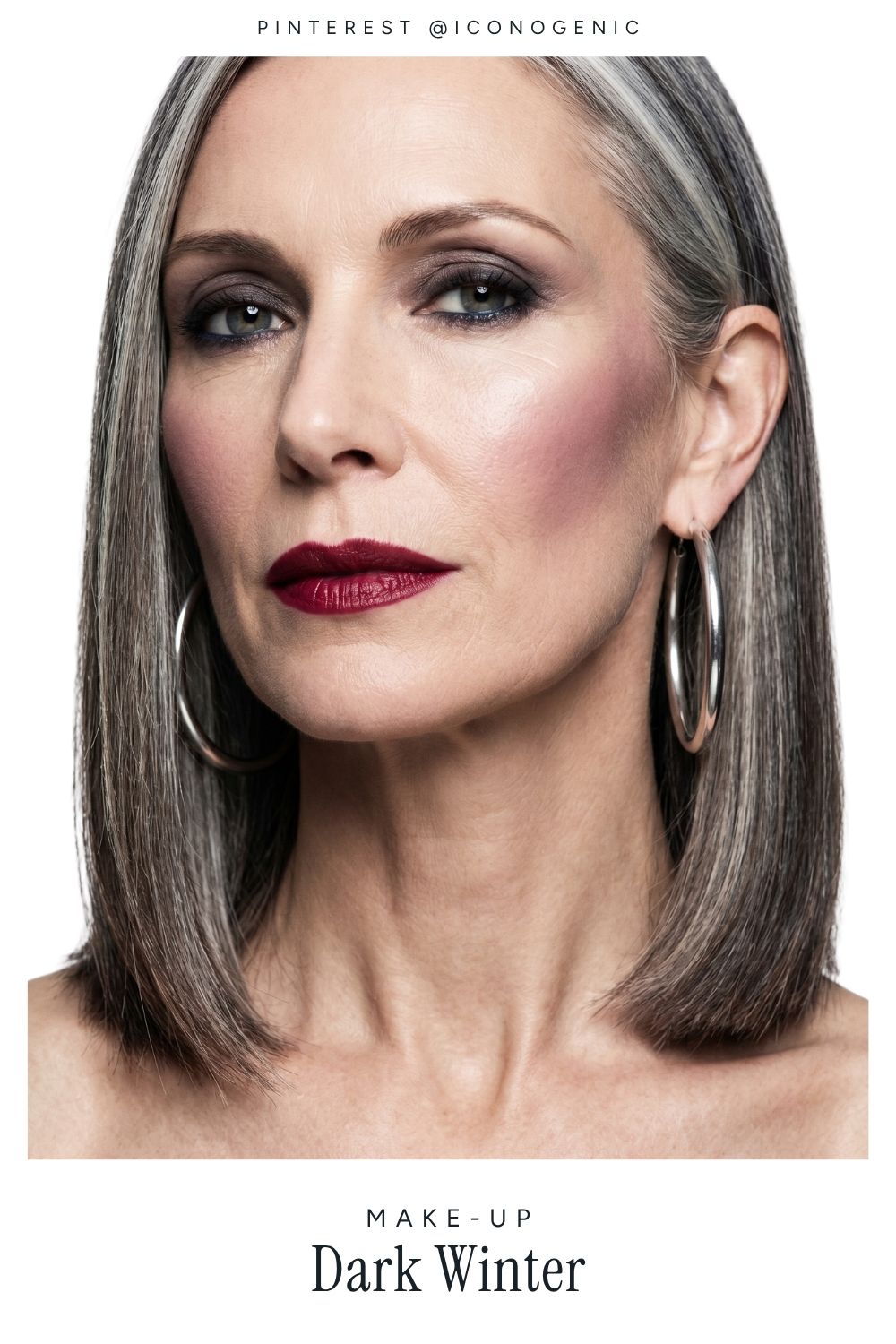
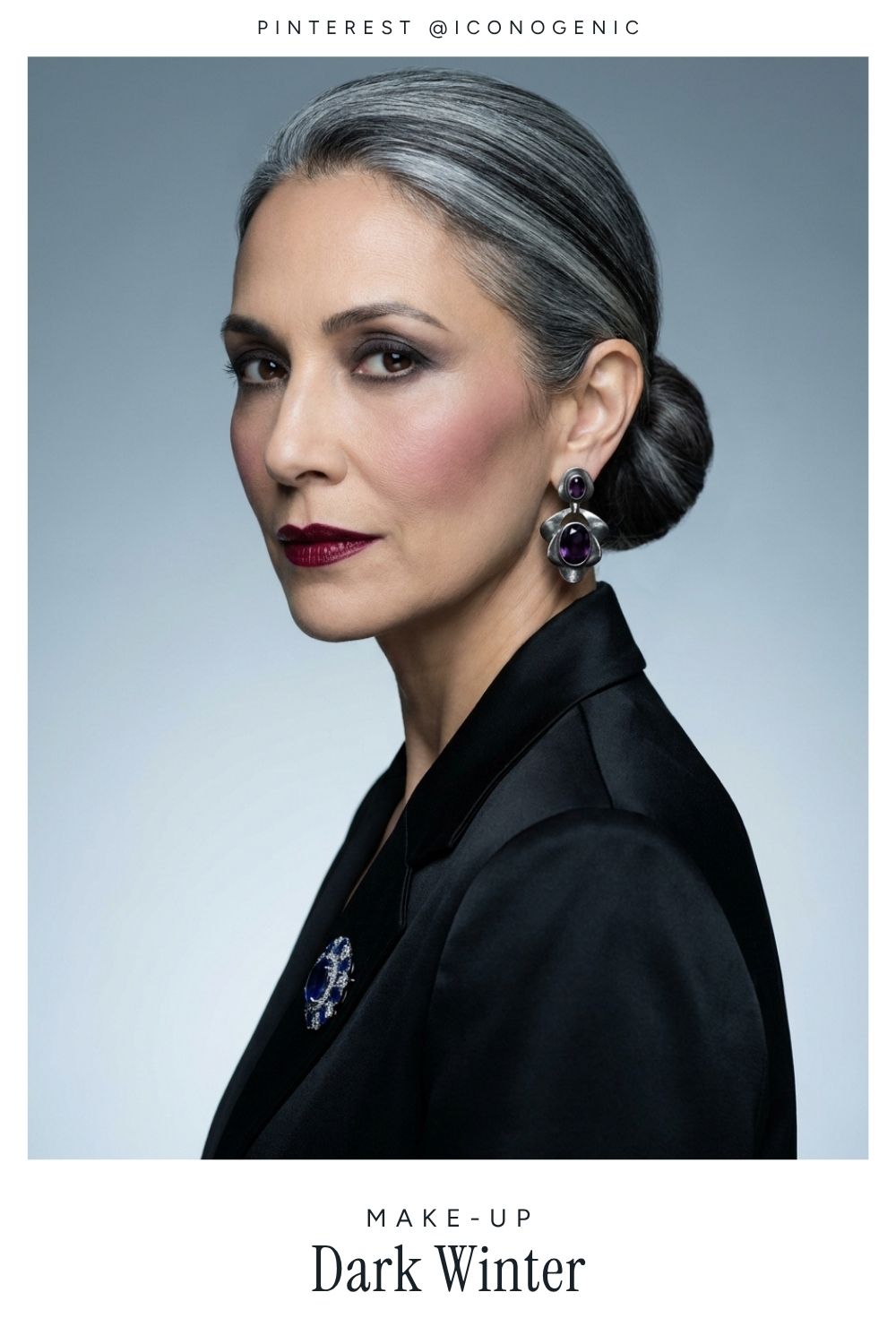
The Line — Dramatic and Soft Dramatic
The Dramatic family contributes vertical authority. Bodies in this group tend to be tall or read tall, with long limbs, narrow or angular bone structure, and a silhouette that wants to extend rather than curve. Pure Dramatic is sleek and angular — sharp shoulders, sculpted lapels, monochromatic head-to-toe ensembles, a “T” cut clean and tall. Soft Dramatic adds a fleshier, more sensual register: the same vertical command, but draped, lush, with broad shoulders softened at the edge and fabric that flows rather than holds. What they share is scale and elongation. Detail stays minimal or oversized — never fussy, never small. Separates that look “thrown together” disrupt the line; the Dramatic family wants ensembles, not outfits. Think architecture, not assemblage.
The Light — Dark, True, and Bright Winter
The Winter family is the cool, contrasted end of the colour wheel. True Winter sits at the centre — purely cool, with blue undertones and no warmth at all, a palette that “seems to be covered with frost” and ranges from true white to true black with saturated jewel tones in between. Dark Winter leans neutral-cool and primarily dark, with a “less-is-more wealth” of deep teal, oxblood, and aubergine alongside icy lights. Bright Winter takes Winter’s coolness and turbocharges it with Spring’s clarity — maximum chroma, the highest contrast of all twelve seasons, vivid fuchsias and acid greens that would overwhelm anyone else. Across all three, the through-line is the same: cool undertone, high contrast, clarity over softness. Silver flatters. Gold goes brassy. Muted dies on contact.
Where They Meet
This is the alchemy. Dramatic lines need colour that can match their scale — anything dusty or blended dissolves into the silhouette and leaves the wearer looking severe rather than commanding. Winter’s contrast is exactly the colour-language those lines were built to carry. A black gabardine column dress on a Dramatic Winter does not read as harsh; it reads as inevitable. The starkness of the season meets the verticality of the line and they reinforce each other — neither softening nor competing. Where a Dramatic Autumn glows like burnished metal and a Dramatic Summer reads as cool restraint, Dramatic Winter is icy precision. The signature is editorial — the kind of presence that photographs in black-and-white and loses nothing.
Signature Signals
A column of jet wool crepe, single-breasted, falling clean from a sharp shoulder to mid-calf. A fuchsia silk blouse worn with charcoal trousers and a cool-white cuff at the wrist. Patent silver hardware, never gold. A monochromatic look broken only by a single icy accent — pale blue at the throat, ruby at the ear. The instinct, always, is to refuse softness: the cardigan stays in the drawer, the floral print never makes it home. Even the Soft Dramatic register, with its draped silks and lush fabrics, keeps the colour palette uncompromising — a sapphire silk gown rather than a dusty rose one.
Common Confusions
Dramatic Winter is most often mistaken for Dramatic Autumn — both carry depth and presence, but Autumn’s depth is warm, earthy, gold-shot, while Winter’s is cool, inky, silver-shot. Place camel beside oxblood and watch which one belongs. The other confusion is Classic Winter, especially Dramatic Classic Winter: the colouring overlaps, but the line softens. Where Dramatic Winter wants the long sweeping coat, Classic Winter wants the tailored knee-length one — same palette, shorter sentence.
Closing Note
Back to the figure in the empty square. She has crossed it now, and the snow is settling into her footprints. What stays with you is not the coat or the colour but the line itself — vertical, deliberate, cut clean against the white. That is the shade. Architecture in ice.